Lonely Abroad? Why Making Friends Gets Harder After a Move
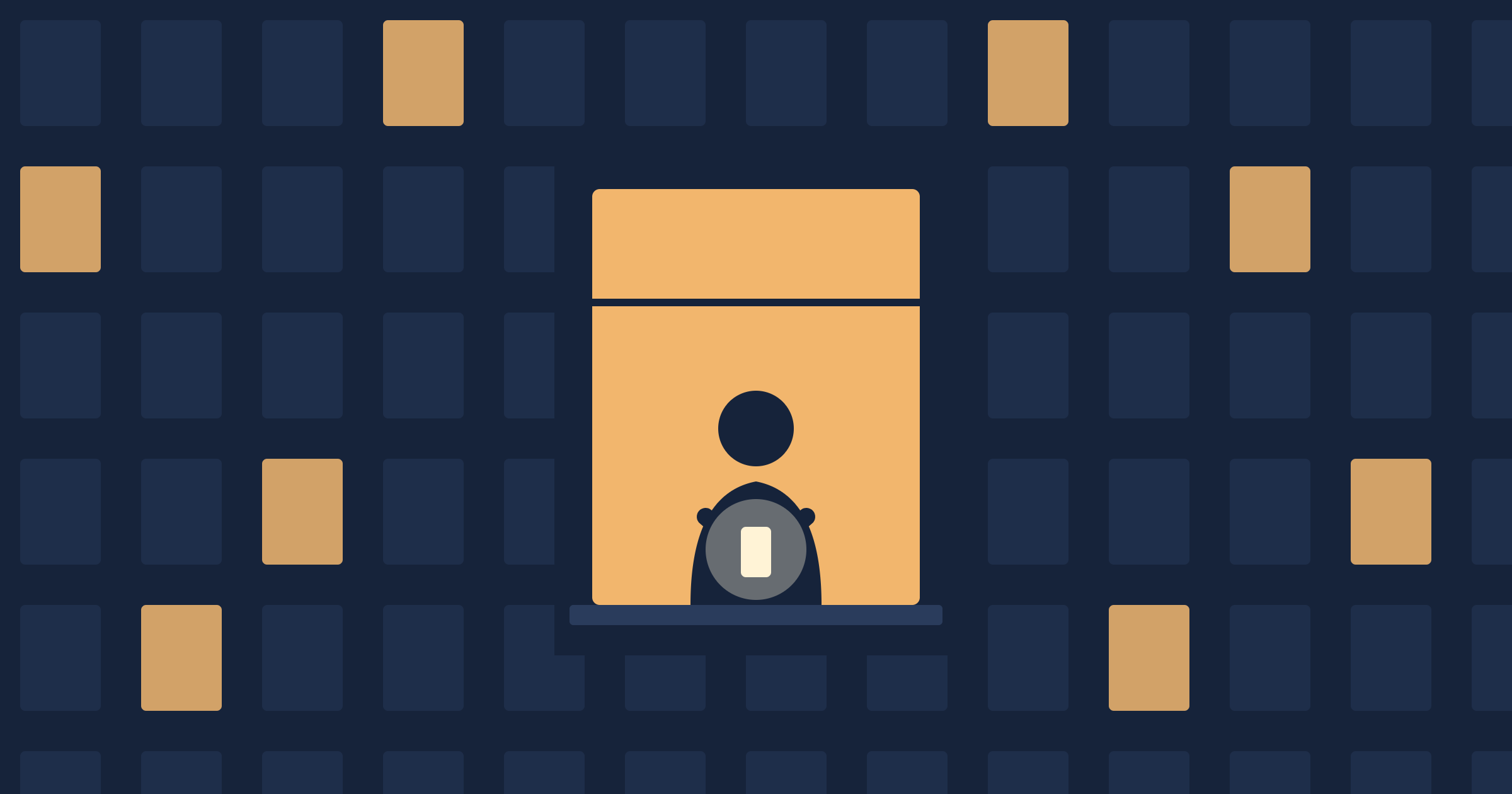
It is a Saturday morning in your sixth year abroad. The calendar is empty, which you would call peace if you had not noticed that it has been empty for three weekends running. Your phone is full: the college group chat is mid-argument about a trip you are not on, and your manager has just sent a thumbs-up. You open your contacts and scroll, and realise you are not sure who you could text to say, "want to get coffee?" Not because anyone would refuse. Because you cannot think of anyone you could ask without it feeling like a big thing.
Nothing is wrong, which is part of what makes this hard to talk about. This article explains why that gap is so common after a move, why friendship is harder to build as an adult than it was at twenty, and what actually helps.
The scene above is a composite, not a description of any one person.
Loneliness is not the same as being alone
Loneliness is a gap, not a headcount. Researchers separate two things that are easy to confuse. Social isolation is objective: having few relationships, roles, group memberships, and little contact. Loneliness is subjective: the distressing experience that arises when the connection you have falls short of the connection you want. Solitude, by contrast, is aloneness by choice that does not feel lonely (2024 review, adapted from the US Surgeon General's Advisory)
That is why you can be lonely with a full calendar, a good job and a partner at home. It also explains why the feeling is hard to justify. By every measure other people can see, you are fine. The gap is where only you can measure it: whether someone knows what your week was really like, and whether you could contact them on a whim.
Wanting more connection than you have is not a flaw. It is a signal, and a healthy one.
What a move quietly takes away
Moving abroad changes more than your address. It removes the structures that used to produce friendship without anyone having to organise it.
Moving abroad usually takes away more than a place. Back home, community came by default through school, college, the neighbourhood and extended family, so friends arrived without anyone arranging anything. Now, nothing is automatic, and every connection has to be started. The shared history that once meant you were known without explaining yourself, with inside jokes included, gives way to starting from "where are you from?" each time. Unplanned contact is gone, too. Dropping in, running into people, and long unscheduled talks have turned into calendar invitations and group chats. Shared language, humour, and food used to mean ease, with no translating of yourself, and now there is constant low-level translation. Practical help close at hand, such as family and household help, once left you time and energy for people, but chores and logistics now fill the evenings. And the friends back home, who offered weekly closeness, are now a time-zone gap away, with lives that have moved on.
This is not a personal failing. It is a structural loss, and structural losses need structural replacements.
Why friendship takes more deliberate effort now
Friendship tends to form under certain conditions. Sociologist Rebecca Adams is credited with naming three: proximity, repeated unplanned interactions, and a setting that lets people drop their guard. School and college supply all three automatically. Adult life often removes them. We may see colleagues repeatedly, but we are rarely vulnerable with them (Franco, 2024)
It also takes more time than most of us assume. In one study of adults who had recently moved and were looking for friends, and a second of university freshmen, Jeffrey Hall estimated that it takes roughly 40 to 60 hours together to move from acquaintance to casual friend, 80 to 100 hours to reach"friend", and more than 200 hours to become close friends. Time spent socialising counted for more than time spent working side by side (NU News, 2018).
These are self-reported estimates, not laws of nature, but the order of magnitude is the point: new friendship is a slow accumulation of shared time.
The implication is encouraging. If you are three months into a new city and have no close friends, you are not behind. You have simply not yet had time to accumulate the hours.
How loneliness keeps itself going
Loneliness is not only a feeling you wait out. It changes how you read the social world.
Psychologist John Cacioppo and colleagues proposed an evolutionary model in which feeling socially isolated increases surveillance of the social world and an unwitting focus on self-protection. Paradoxically, it raises the wish to connect and also produces an implicit hypervigilance for social threat. In an EEG study led by Stephanie Cacioppo, lonely participants' brains picked out social threats, such as exclusion, more quickly than non-social threats, compared with non-lonely participants (Cognitive Neuroscience Society)
In daily life, that can feed a loop:
1. You feel disconnected, so you scan more closely for signs that you are not wanted.
2. Ambiguous signals start to look like rejection, so you hold back, decline, or stay quiet.
3. The people around you read the reserve as disinterest, and the closeness you wanted does not form.
4. That seems to confirm the feeling, and the loop starts again.
The later steps are a clinical reading of how hypervigilance can play out, not something the study above measured. There is a hopeful counterpoint. Psychologist Marisa Franco summarises research showing that people tend to underestimate how much others like them after a conversation (Franco, 2024)
The loop is not a sign that something is wrong with you. It is what a normal social brain does under perceived threat, and behaviour can interrupt it.
The CBT lens: the thoughts that block the invitation
CBT looks at the thoughts that sit between the wish for connection and the action. Some common ones:
• "They already have their friends." (mind-reading)
• "If I suggest something and they decline, it will prove nobody wants me." (catastrophising)
• "Friendships here are shallow." (overgeneralising, and sometimes a protective story)
• "I am too old to start over." (fortune-telling)
• "If I have to try this hard, it is not real friendship." (the belief that real friendship is effortless)
The last one deserves attention. Francocites a study finding that people who believed friendship should happen without effort were lonelier five years later, while those who expected to make an effort showed up and met people.
Treat each thought as a prediction and test it. Replace "nobody wants to hang out with me" with a small experiment: invite one person to one specific thing and note what actually happens. A declined invitation usually says more about their calendar than your worth. Count what happens, not what you feared.
The behavioural half of CBT matters even more. In depression research, behavioural activation means monitoring your mood and activities, then deliberately increasing rewarding activity and positive contact with your environment. Meta-analysis of randomised trials found large effects against control conditions and results comparable to cognitive therapy (Cuijpers et al., 2007). Loneliness is not depression, and I am applying the principle by analogy.
But a core idea transfers: action can lead mood rather than waiting for it. Schedule the connection first and let the motivation catch up.
The ACT lens: willing to be awkward
ACT starts from values: chosen qualities of action that you live moment by moment and never finish. Connection is one. So are generosity, curiosity, and belonging. "Make five friends" is a goal that can be achieved. "Be someone who shows up for people" is a value you can live this week.
Willingness. New friendship involves awkwardness: the stilted first conversation, the invitation that goes unanswered. ACT does not promise to remove that discomfort. It asks whether you are willing to have it in the service of something that matters. Waiting to feel at ease before you act usually means not acting.
Defusion. There is a difference between "I am intruding" and "I am having the thought that I am intruding." The second gives the thought less authority without needing it to stop.
Committed action. Small, repeated acts that fit the value: the weekly class, the standing coffee, the message to an old friend. ACT describes committed action as growing patterns of effective behaviour linked to chosen values (ABCS).
In this case, that means the same small effort made again, not one heroic evening.
Ways to begin
None of these is dramatic, which is the point. Connection is mostly built from small things repeated.
• Choose repetition over novelty. One recurring commitment, such as a weekly class, a team or a volunteering shift, beats many one-off events, because repeated contact builds familiarity. Franco's advice is to join something that repeats rather than attend a single event.
• Make one small, specific invitation a week. "I'm going to the market on Sunday. Want to come?" Hall's advice is that you cannot make people spend time with you, but you can invite them.
• Change the setting once it goes well. If you get along with someone in a class or at work, suggest a walk or dinner. Hall recommends switching the context, and Franco calls this repotting a friendship.
• Keep old friendships going at a lower cost. A standing call, a show you both watch, a voice note. They matter, and they are not a substitute for people nearby. It is fine if some thin out. That is distance, not failure.
• Use shared culture and shared activity. Some people find that a desi community eases the start. Others prefer an activity group first. Either can work, and many people use both.
When it is more than loneliness
Sometimes loneliness sits alongside something heavier. Signs worth taking seriously:
• low mood on most days for more than a couple of weeks
• changes in sleep or appetite, or constant exhaustion
• losing interest in things you usually enjoy
• withdrawing from people even when invitations come
• feeling hopeless, or thinking that others would be better off without you
If these fit, speak with a mental health professional.
If you are thinking about harming yourself, or you are worried about your safety, contact local emergency services or a crisis line now rather than waiting.
Working with Setu
Setu offers online therapy grounded in CBT and ACT for people of Indian origin and Indian nationals building lives between countries. If loneliness is taking up more of your life than you want, a free 30-minute discovery call is a low-pressure way to see whether working together would help. You do not need to arrive with a plan. https://setu.org.in/book
This article is general information and is not a substitute for professional assessment.

Purva Sreekaanth
Psychologist & Founder, Setu